
FUTURE OF VOICE CHANGER
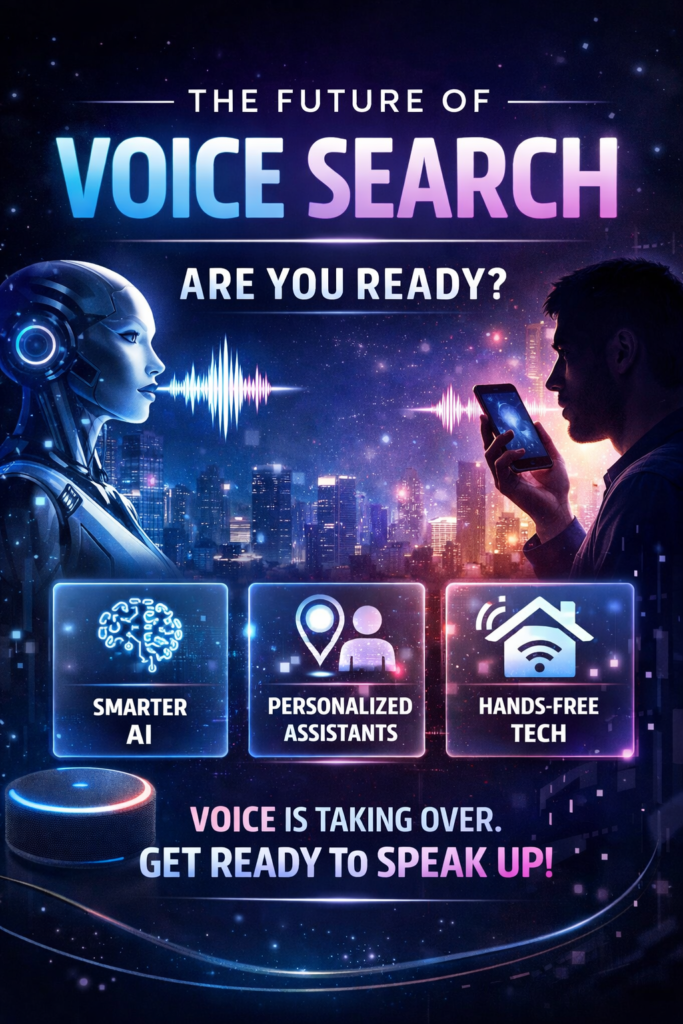
Voice search has become a formidable tool in recent years that takes the form of voice search, which was previously a novelty feature. The future of voice search has never been as promising as it is now with the rapid development of artificial intelligence, natural language processing and ubiquitous smart devices. It is not only changing the modalities in which the users access information but also having an influence on digital marketing, content and quotidian consumer behavior.
Convenience is one of the major drivers of the voice search ascendancy. Speech is quicker than typing and also more natural especially when the user is involved in any multitasking task like driving, cooking or work. As a result, one is able to ask a query and get immediate answers. This convenience will be enhanced in future versions of voice assistants since they will be more contextual and able to detect emotions, accents, and even conversational intent. Consequently, voice search will gradually evolve to be more of a conversational process with a human assistant instead of a more cold and robotic machine.
Another relevant trend that is defining the future of voice search is on the issue of personalization. Voice technology is being more advanced in identifying users individually, their tastes, habits and routines. Projected voice search systems will be in a position to provide the most personalized response in relation to antecedent behavior, geographic location, time of day, and even affective state. As an example, voice assistants do not have to suggest generic restaurant options but can suggest restaurants that match eating habits, financial abilities, and past visits.
The voice search built in smart homes and wearables is also expected to grow at a very fast pace. Voice commands will hold a primary role in daily existence, being controlled to turn the lights on and off, control the appliances, and track the health indicators. Voice is poised to become the most common mode of interaction with technology as the IoT devices keep on increasing. Such a shift will make online experiences more convenient, touchless, and available to people of all age groups, including seniors and individuals with disabilities.
The development of voice search requires the new strategic paradigm in business and marketing perspectives. Traditional search engine optimization through the use of a keyword will become conversation-based SEO. Marketers and content developers should, therefore, focus on natural language, inquiry based questions and featured snippets that can be easily said by voice assistants. Voice search benefits local businesses more especially because when people need services that are close to them, they will type words like near me, open now, etc.
However, the issue of privacy and data security still stands out. With voice technology continuously monitoring commands, companies should implement clear data policies and policies that guarantee a high level of security. The users will demand a better control on how their voice is stored and used. Trust building will be critical to the popularization of voice technology.
CONCLUSION
To conclude, voice search is a progressive future that is smart, dynamic, and highly integrated in everyday life. It provides faster access to information, increased customization, and wider inclusion of technology. With the continuing innovation, voice search will no longer be limited to mere queries but it will be an elaborate digital companion, thus defining the future of human-technology interaction.